



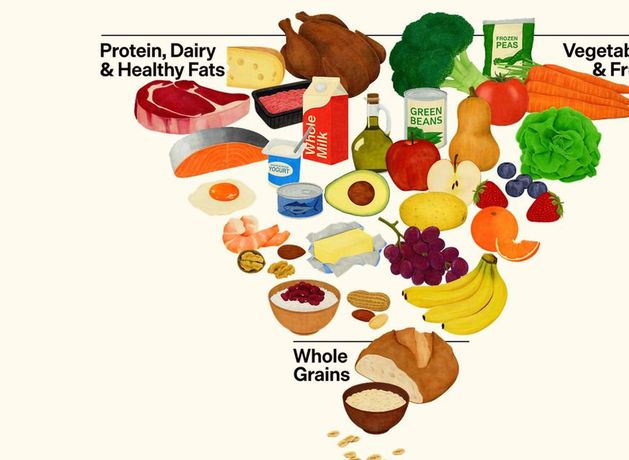

In a recent statement that has sparked debates across the Atlantic, Robert F. Kennedy Jr., the U.S. health secretary, has proposed a rather audacious revision of dietary guidelines. His fresh take on nutrition, labelled “Make America Healthy Again,” boldly challenges the established food pyramid that has guided millions for decades. In a radical shift, he advocates for increased consumption of red meat and full-fat dairy—a reversal of 36 years of public health messaging that promoted moderation in these foods.
Kennedy’s recommendations suggest that Americans should focus on eating what he dubs “real food.” This includes, surprisingly, more fatty meats and dairy products, while advocating for reduced intake of whole grains, which have traditionally been staples of a balanced diet. Such claims undoubtedly stir controversy among nutritionists and health experts, especially at a time when scientific consensus warns against the health risks associated with high red meat and saturated fat consumption.
“We’re witnessing a seismic shift in nutritional philosophy,” remarked Dr. Luke O’Neill in a recent opinion piece in the Independent. As professionals grapple with the implications of Kennedy’s statements, many express concern about the potential public health impacts of promoting a diet rich in red meat at a time when heart disease and obesity are significant threats.
As we digest this new dietary advice, one must wonder whether Kennedy’s intentions stem from a genuine concern for American health or are merely a populist response to a growing distrust of conventional dietary wisdom. It’s easy to see why this resonates with certain audiences, particularly those weary of what they perceive as overly restrictive dietary norms.
In our view, it’s essential to approach new dietary suggestions with a healthy dose of skepticism (no pun intended). After all, we all remember the low-fat craze in the ’90s that saw us swapping butter for margarine with promises of better heart health, only for some studies to later suggest that margarine wasn’t the magic fix after all. Will we look back in a few years and shake our heads at the meat-centric diet pushed by Kennedy? Or is there indeed merit to revisit how we’ve discussed food? It’s a juicy topic for sure, but maybe let’s hold off on stocking up on rib-eye steaks just yet.
Interestingly, the discussion around dietary recommendations isn’t just a contemporary issue. Historical diets have varied dramatically across cultures and eras, often at odds with today’s norms. In ancient Rome, a diet heavy in fish was deemed necessary for health, while medieval Europeans thrived on grains and legumes. As cultural preferences shape our plates, what we eat remains a complex blend of tradition, science, and sometimes whimsical trends.
For those curious about dietary science, here’s a curious fact: The original food pyramid was introduced by the USDA in 1992 and depicted grains as the foundation of a healthy diet. Fast forward to today, and with changing attitudes toward food, it seems we may be on the brink of yet another nutritional renaissance.
So, as we chew over Kennedy’s thoughts, one question remains: is this just the start of a larger conversation on what constitutes a healthy diet in modern society? Let’s keep our forks ready.